TRUSTED BY
Rot is one of the most serious threats to a log home, but with timely repair, it doesn’t have to mean major loss. Left untreated, rot spreads quickly and compromises the structural integrity of your home.
At Knaughty Log Restoration, we specialize in repairing rot damage—from minor soft spots to full log replacements—using proven restoration methods that blend seamlessly with your existing structure. Serving Oregon, Kentucky, and Tennessee, our crews restore both the strength and beauty of your home.
Trim, facia, or other unique areas receive their own treatment.
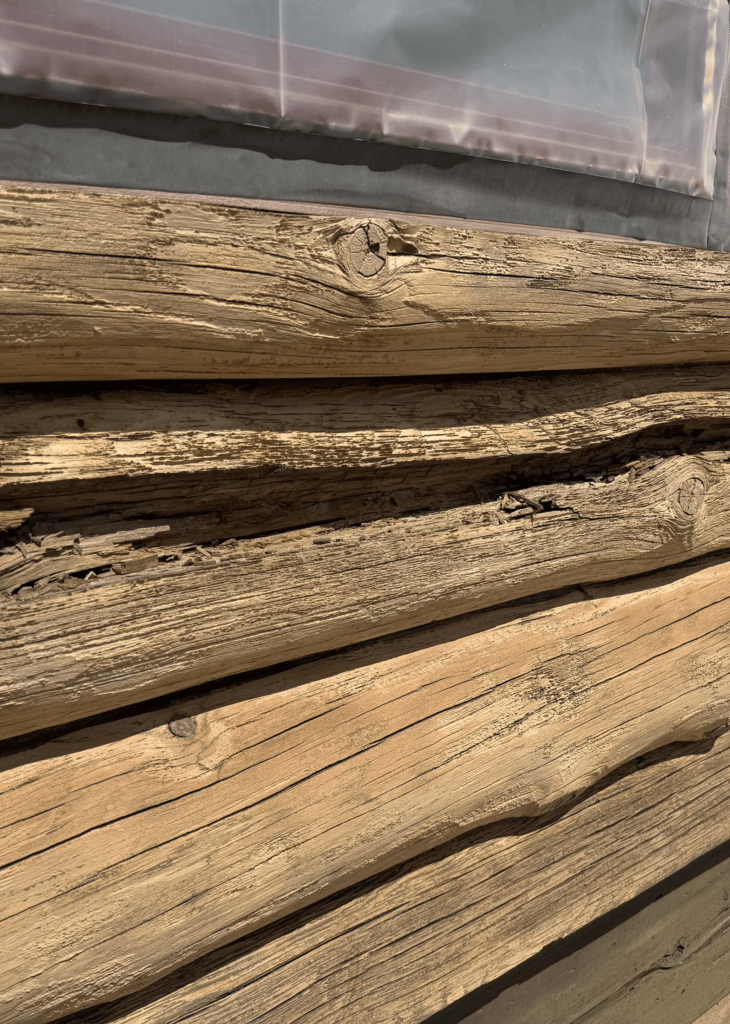
A cabin outside of Sisters had one log under a window where a large check allowed water to hold and led to rot.
Our crew removed the decayed section, treated the surrounding wood with borates to prevent further damage and installed a new log face to match.
Rot usually shows up where wood stays wet the longest — and it often starts small before it becomes obvious. Common signs include:
Soft or spongy wood (you can dent it with a screwdriver or fingernail)
Cracking that looks “crumbly” or wood that breaks apart in layers
Dark staining that stays dark even after dry weather (especially below leaks or splash zones)
Mushroomy/fuzzy growth or persistent mildew in the same spot
Hollow sound when tapped compared to surrounding solid wood
Areas that repeatedly fail: log ends, below windows, under deck tie-ins, corners, bottom courses, and anywhere gutters/drip edges are missing
Important: not all dark wood is rot. Some is surface staining or weathering. The difference is whether the wood is structurally compromised and staying wet.
If you’re unsure, we evaluate rot on a severity spectrum (localized, moderate, severe) and recommend the least invasive repair that actually restores strength and stops the moisture source.
From small epoxy repairs to full log replacements, we pioneered the Hierarchy of Log Rot to determine exactly what your home needs.
Signs include soft spots, dark staining, crumbling wood, or musty odors.
Sometimes, yes — it depends on how deep the rot goes and whether we can eliminate the moisture source that caused it.
In many cases we can stop and repair rot without full log replacement by using a staged approach:
Stage 1 (Localized repair): Remove compromised material and rebuild with epoxy-based repairs when the damage is shallow and the log is still structurally sound.
Stage 2 (Re-facing / partial rebuild): Rebuild the damaged face or section of a log when rot is more advanced but the log doesn’t require full removal.
Full replacement (Stage 3) is typically only needed when the rot is deep, structural, or widespread, or when the log can’t be restored to safe strength.
The key point: no repair lasts if the moisture problem isn’t corrected. We focus on fixing the cause (leaks, splashback, failed detailing, trapped moisture) so the repair actually holds up long-term.

In most cases, yes — we can get an excellent match, but we’ll also be upfront: a brand-new log will never look identical to a 20–80 year old log on day one.
Here’s how we get as close as possible:
Profile match: We can mill replacement material in-house when needed, and we also have trusted suppliers around the country who can provide common log profiles and species.
Species match: We source the same (or closest) species whenever possible so the wood behaves and finishes similarly.
Color match + blending: We stain to match and feather/blend surrounding areas so the repair doesn’t look like a hard “patch.”
What to expect: new wood often looks slightly different at first because it’s fresher and hasn’t weathered. Once it’s stained and the home goes through a season or two, it typically blends in significantly.
Our goal is always the same: match the structure first, then make it look clean and intentional—not like a bunch of obvious replacements.
Rot is almost always the result of one thing: wood staying wet too long because water is getting in — or can’t get out.
The most common causes we see are:
Failed or aging coatings that no longer repel water
Trapped moisture from paint/film-forming products or incompatible coating layers
Poor drainage and detailing (no drip edges, missing gutters, bad flashing, water running behind trim)
Splashback from soil/rock beds or decks holding moisture against the logs
High-risk areas like log ends, below windows/doors, corners, bottom courses, and deck tie-ins
Persistent wetting from sprinklers or runoff patterns
Important point: rot isn’t just “old age.” A well-protected log home can last generations. When rot shows up, it’s usually pointing to a specific moisture pathway we can identify and correct.
Stop rot before it spreads. Our rot repair team restores strength, blends repairs cleanly, and fixes the moisture pathways that caused the damage—so you’re not paying to repair the same spot twice. Rot Repair services are available throughout Oregon, Kentucky, and Tennessee.