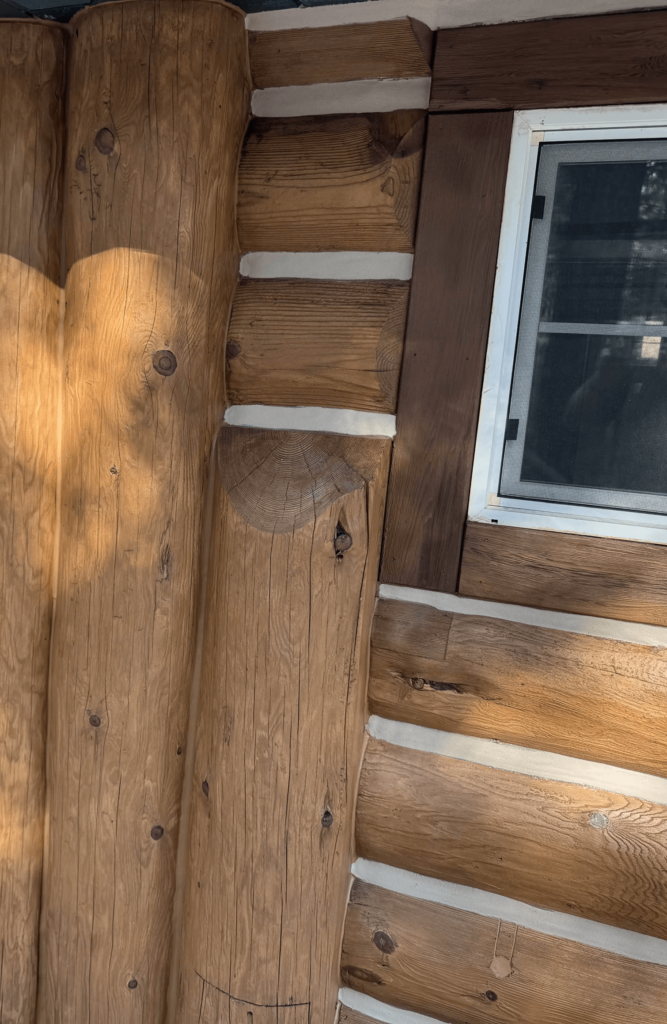
Chinking & Caulking for Log Homes

Seal gaps, stop drafts, and protect your home from the elements.

TRUSTED BY

Your Log Home,

Enhanced.

Proper chinking and caulking are essential to a healthy, efficient log home. Over time, sealants can dry, crack, or pull away, leaving gaps that allow water, pests, and air to enter.

At Knaughty Log Restoration, we repair and install professional-grade chinking and caulking systems that safeguard your home while preserving its rustic charm. Whether you need touch-ups or a full reseal, we serve homeowners across Oregon, Kentucky, and Tennessee with expertise you can trust.


Why Chinking & Caulking Matter

Prevent moisture intrusion

Stop water from seeping in and causing log rot.

Keep pests out

Close off entry points for bats, carpenter bees, and insects.

Improve energy efficiency

Reduce drafts, helping your home stay comfortable year-round.

Enhance appearance

Smooth, color-matched sealants give your home a polished, well-maintained look.

Extend log life

Protect against structural damage caused by unsealed joints.

Our Proven Process

Assessment

We inspect all joints, gaps, and previous sealants.

Preparation

Old or failed materials are removed, and surfaces are cleaned.

Backer Rod Installation

Flexible backer rod is placed for proper depth and adhesion.

Application

High-performance chinking or caulking is applied in a smooth, even finish.

Detailing & Cleanup

Edges are tooled for clean lines, and the site is left tidy.

Tennessee Log Home – Energy Efficiency Restored

The Problem

A Sevierville homeowner noticed drafts and rising energy bills due to failing caulking around windows and log joints.

The Solution

Our team removed cracked sealants, installed new backer rod, and applied color-matched caulking throughout the home.

The Result

A tighter, more efficient structure with improved comfort and a refreshed exterior appearance.

What our customers say

Why Choose Knaughty Log

Specialized skill

Chinking and caulking log homes is an art; we’ve mastered it.

Dedicated crews

In-house W-2 employees, trained specifically in log home care.

Attention to detail

Clean lines and smooth finishes elevate both function and appearance.

Durable materials

We use industry-leading synthetic sealants built to last.

FAQs

Do you caulk all cracks and checks?

No — and that’s a common misconception. Not every check should be caulked.

If a crack is too small, you can’t get enough sealant into the joint for proper adhesion. When the wood moves (and it will), that sealant typically lets go and fails, which can actually create a worse water path than leaving it alone.

Our rule of thumb: we caulk checks that are most likely to take on water, not every line in the wood.

  • Size: typically ¼” wide or larger

  • Location: top half of the log and other areas exposed to the elements (where water sits or runs)

Smaller checks are usually best handled with a proper coating system (stain/finish) rather than forcing sealant where it can’t perform.

When it’s installed correctly and the home is maintained, modern chinking/caulking can last 10–20 years.

That said, longevity depends on a few big factors:

  • Proper joint design and prep (clean, dry, correct depth/width)

  • Using the right product for the location (not all sealants belong everywhere)

  • Sun and weather exposure (south/west walls take more abuse)

  • Movement and moisture management (gutters, overhangs, splashback, sprinklers, etc.)

The important truth: most “failures” aren’t the product — they’re from poor prep, too-thin application, or trying to seal places that shouldn’t be sealed. Our approach is to seal the right areas, the right way, so it performs long-term.

In most cases, yes — we can get it very close, but “perfect” depends on what we’re matching to.

Here’s what affects the match:

  • Existing color/finish condition (sun-faded areas vs protected areas)

  • Wood age and species (logs change tone over time)

  • Type of repair (epoxy, new wood, chinking/caulking all accept color differently)

How we handle it:

  • We tint and blend sealants/chinking to match the surrounding color as closely as possible

  • When staining is involved, we feather and blend the repair area so it doesn’t look like a hard patch

  • If the existing finish is heavily weathered or inconsistent, we’ll recommend the best approach to make it look uniform (sometimes that means touching a larger area than just the repair)

Bottom line: our goal is that repairs look intentional and clean, not like a bunch of obvious patches.

No — we handle interior chinking and caulking as well.

Interior work is usually focused on:

  • Air sealing drafts and stopping visible light gaps

  • Sealing around windows/doors, corners, and settling gaps

  • Improving comfort and efficiency without changing the character of the home

We’ll confirm what’s driving the gaps (normal movement vs a larger issue) and recommend the right sealant approach so it performs over time—not just looks filled.

A good rule: if the sealant is separating, cracking, or letting air/water through, it’s time to address it.

Common signs to look for:

  • Visible gaps where the sealant has pulled away from the wood

  • Cracks, splits, or brittle sections (especially on sunny elevations)

  • Peeling or missing sections around corners, butt joints, and transitions

  • Drafts or daylight visible from the interior

  • Water staining below joints, or recurring mildew in the same areas

  • Bee activity or insects using gaps as entry points

One important note: hairline cracks in logs aren’t always a sealant issue—logs naturally check. The real concern is open joints and separation where water and air can move. If you’re unsure, a quick inspection can usually tell us whether you need spot repairs, targeted resealing, or a larger rework.

Service Area

Restore Your Home Today

Seal out drafts, water, and pests with professional chinking and caulking—done only where it matters, and done to last. Chinking & Caulking services are available throughout Oregon, Kentucky, and Tennessee.